Forces
Whether you fit into the 99.5% of people that float or the 0.5% that sink, one fact is constant for everyone. Your chest floats better than your legs.
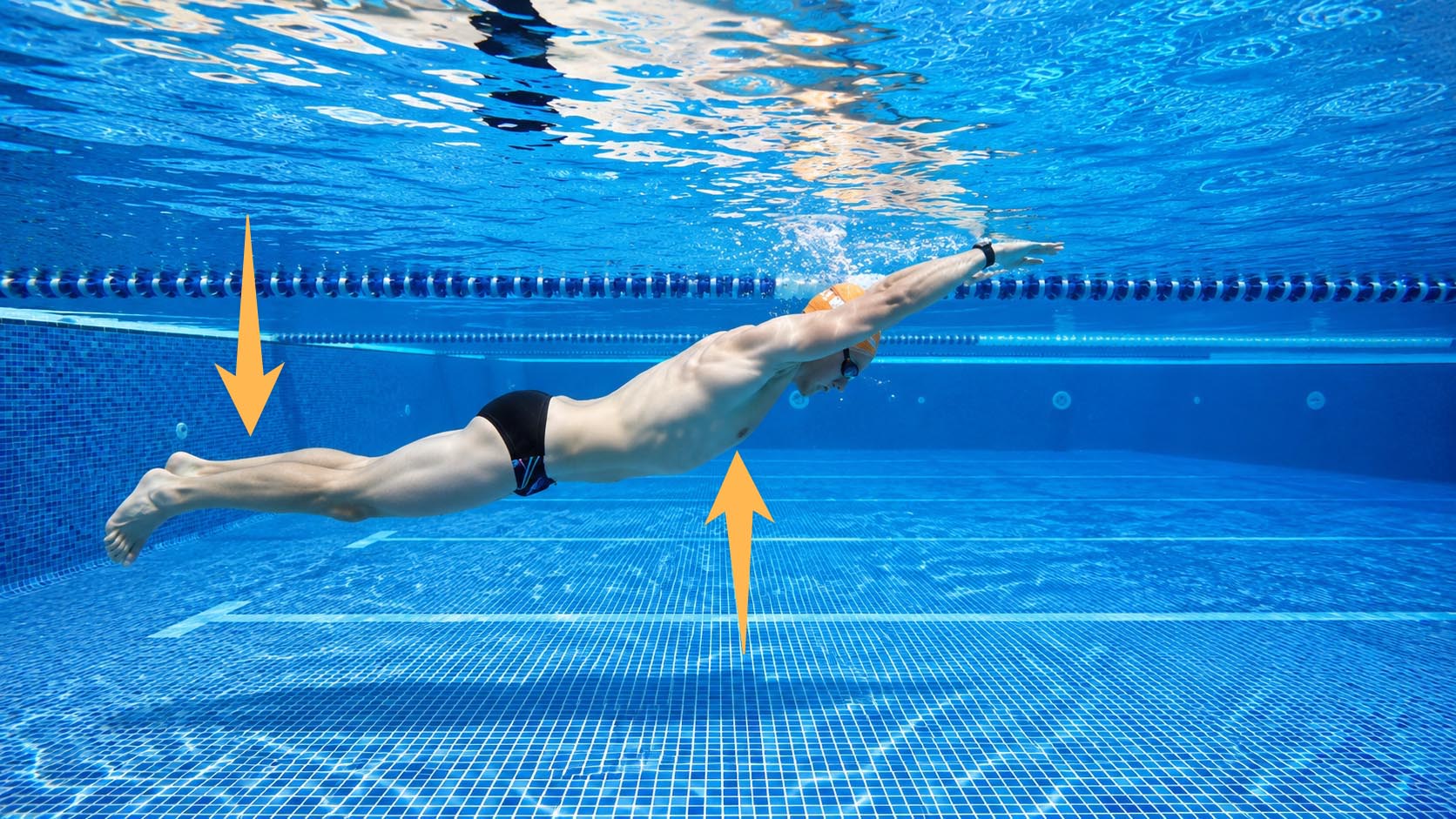
There are two forces responsible for your floaty chest and sinky legs.
1
Buoyancy — an upwards force
It supports or pushes up on your body and causes you to float.
2
Gravity — a downward force
It pulls down on your body and causes you to sink.
For you to float up on the surface of the water, the force of buoyancy must be greater than the force of gravity.
Gravity > Buoyancy
You sink.
Buoyancy > Gravity
You float.
The force of buoyancy is strongest around your chest. Because of your lungs, your chest has the lowest sp gr in your body. It is the least dense part of the body. This is where the force of buoyancy is strongest so we call the chest your center of buoyancy in the water.
The force of gravity is strongest around your legs. Your legs have a higher sp gr than water, so the force of gravity is strongest through your legs.
The way gravity acts on your body is a little weird. There isn't one specific spot gravity pulls down through. Unlike buoyancy, which always pushes up through your lungs, the force of gravity can shift. The exact location gravity pulls through will move based on your body position. It generally pulls down through the area of your hips. But it can move up towards your belly button or down toward your knees, depending on how you are positioned. We call the point that gravity pulls down through the "center of gravity".
To float, the center of gravity and the center of buoyancy must align. Gravity must pull down in exactly the same line as buoyancy pushes up. With both forces pushing and pulling in the same place, you float level.
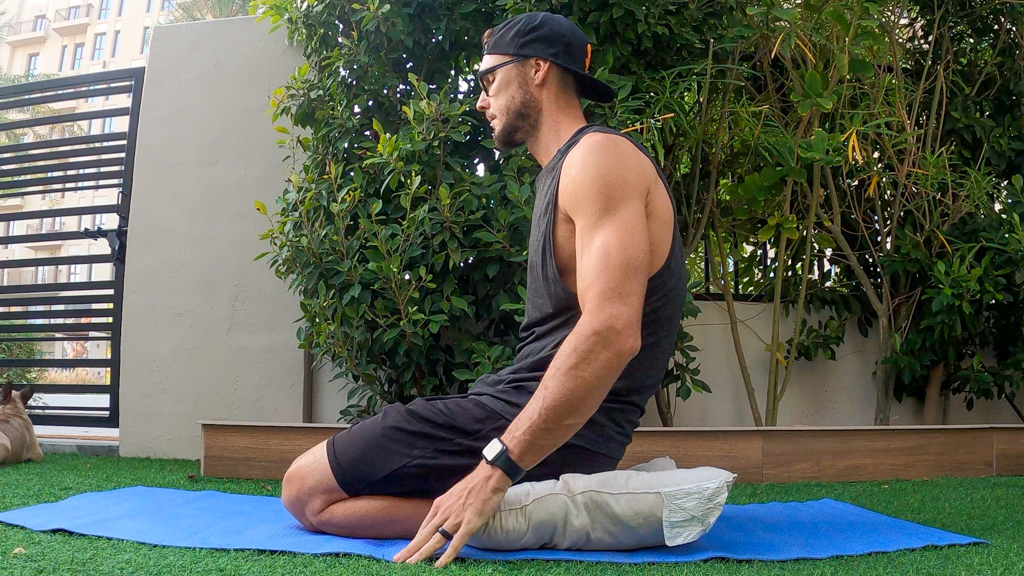
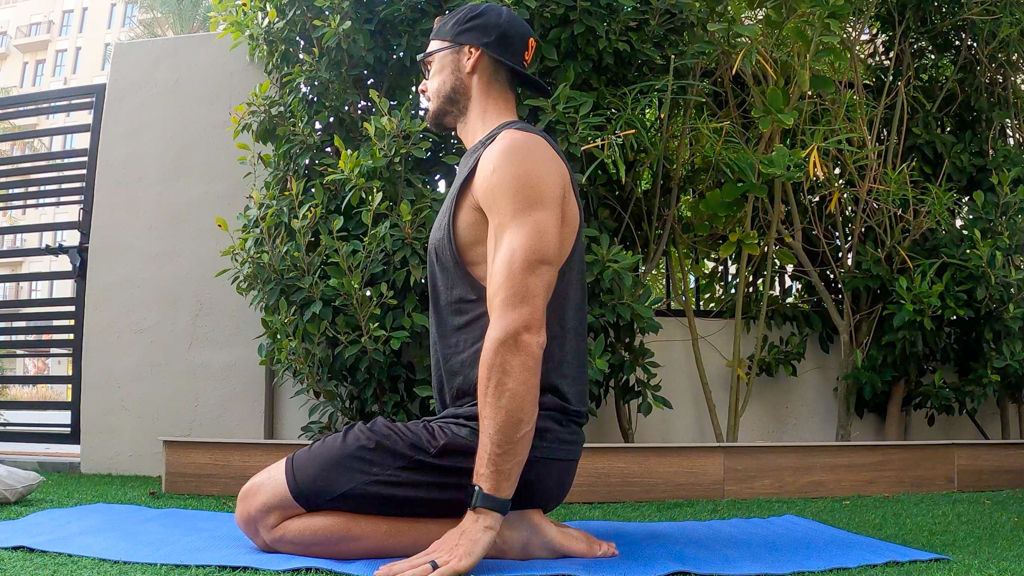
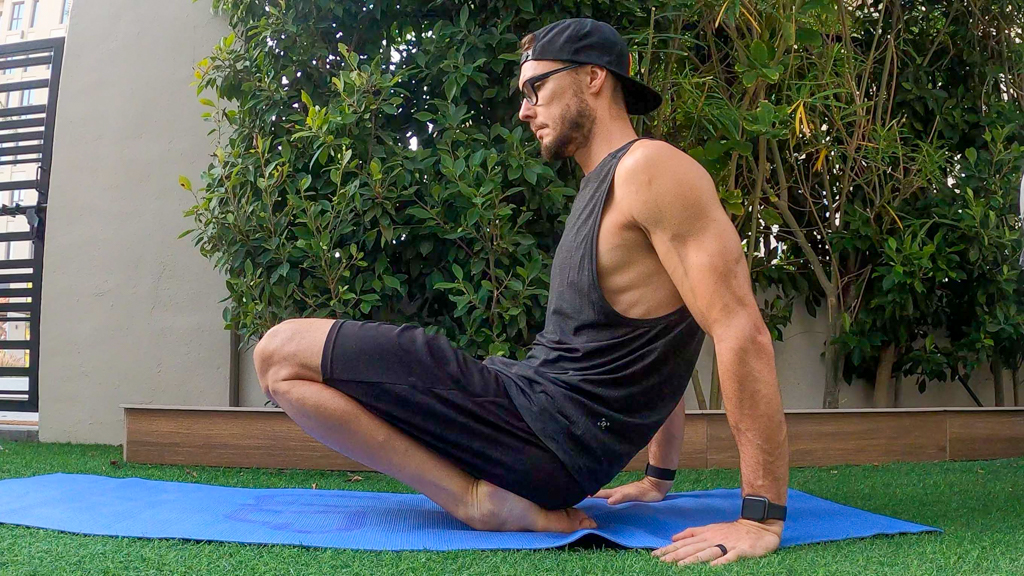
This is why you float in the tuck of the mushroom float. During the mushroom float test, your legs sit underneath your lungs. So your center of gravity and center of buoyancy line up, one on top of the other. As a result you bob up to the surface.
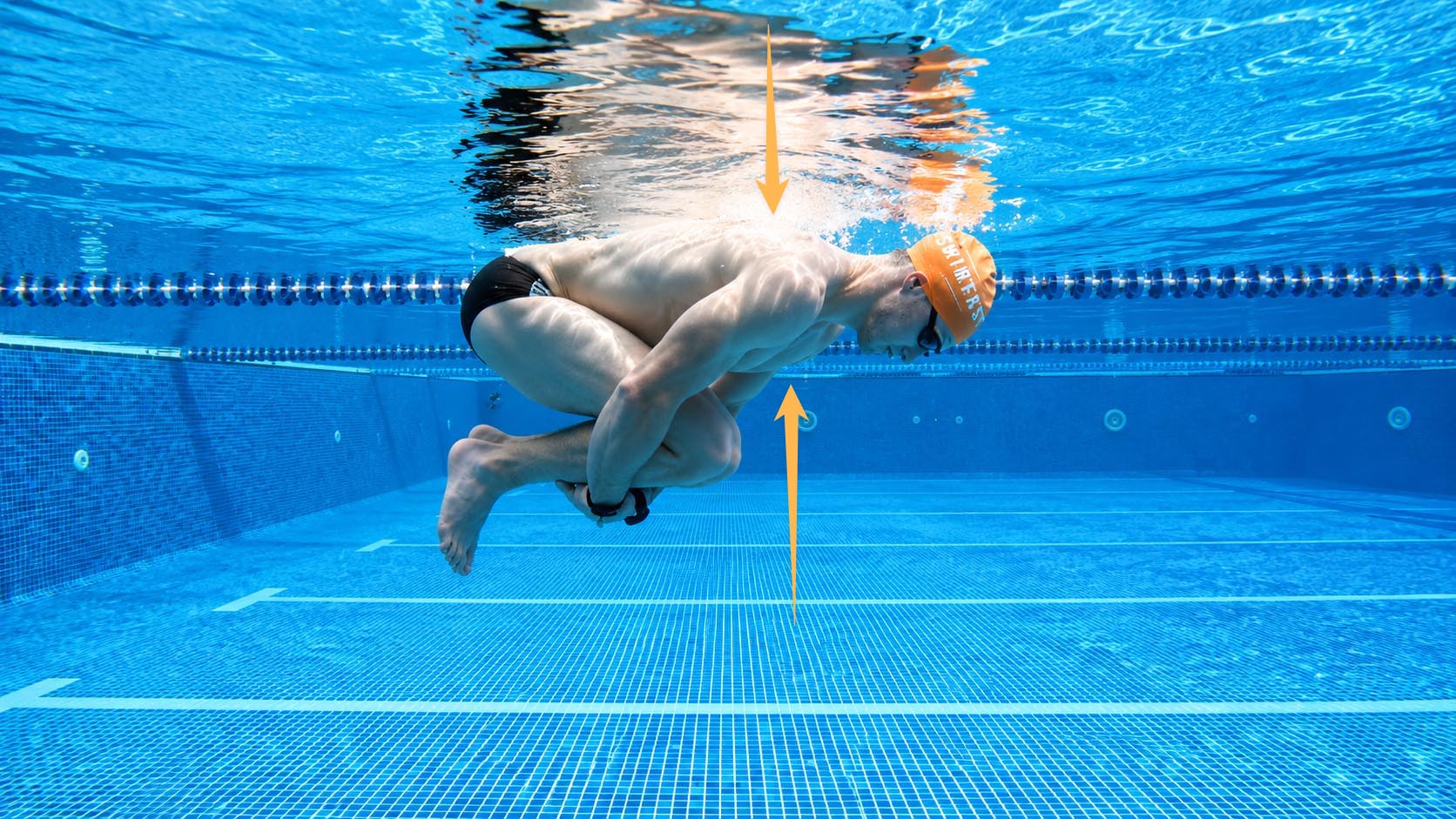
You don't swim freestyle tucked in the mushroom float ball though. And this is where the sinking leg problem is born.
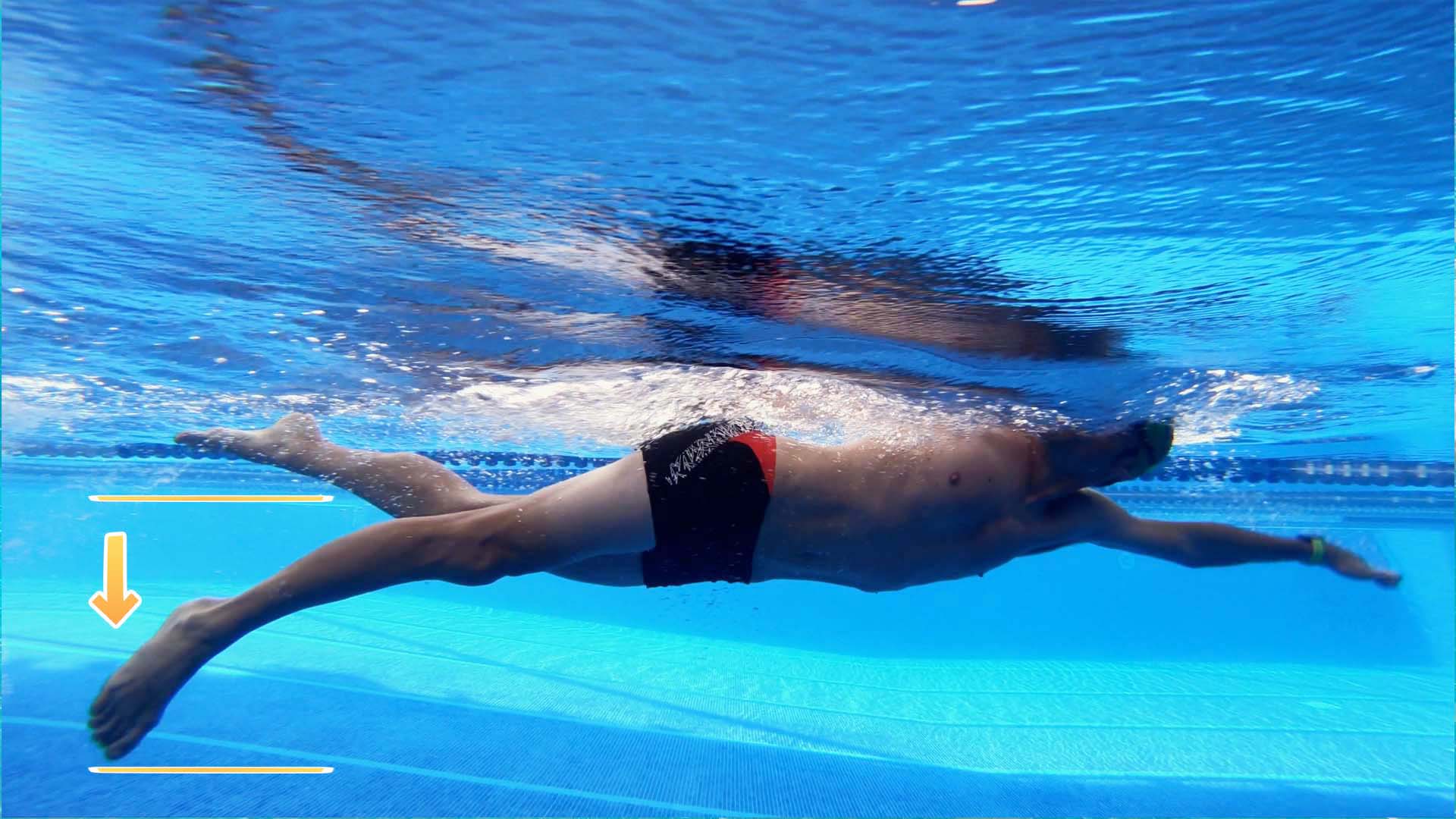
As you stretch out your legs, the center of gravity begins to move down towards your feet. The further the center of gravity moves from the center of buoyancy, the faster your legs sink.
The Dead Man's Float
We now know the center of buoyancy always pushes through your chest. And we learned that the center of gravity pull shifts as your body position changes. The Dead man's float demonstrates this for us very nicely.
Drill
Dead Man's Float — Phase 1
- Begin with a mushroom float by taking a deep breath in and then hold your breath.
- Lift your feet up off the floor and lower your head into the water.
- Tuck your body into a ball, bring your knees up to your chest and hold your shins with your hands.
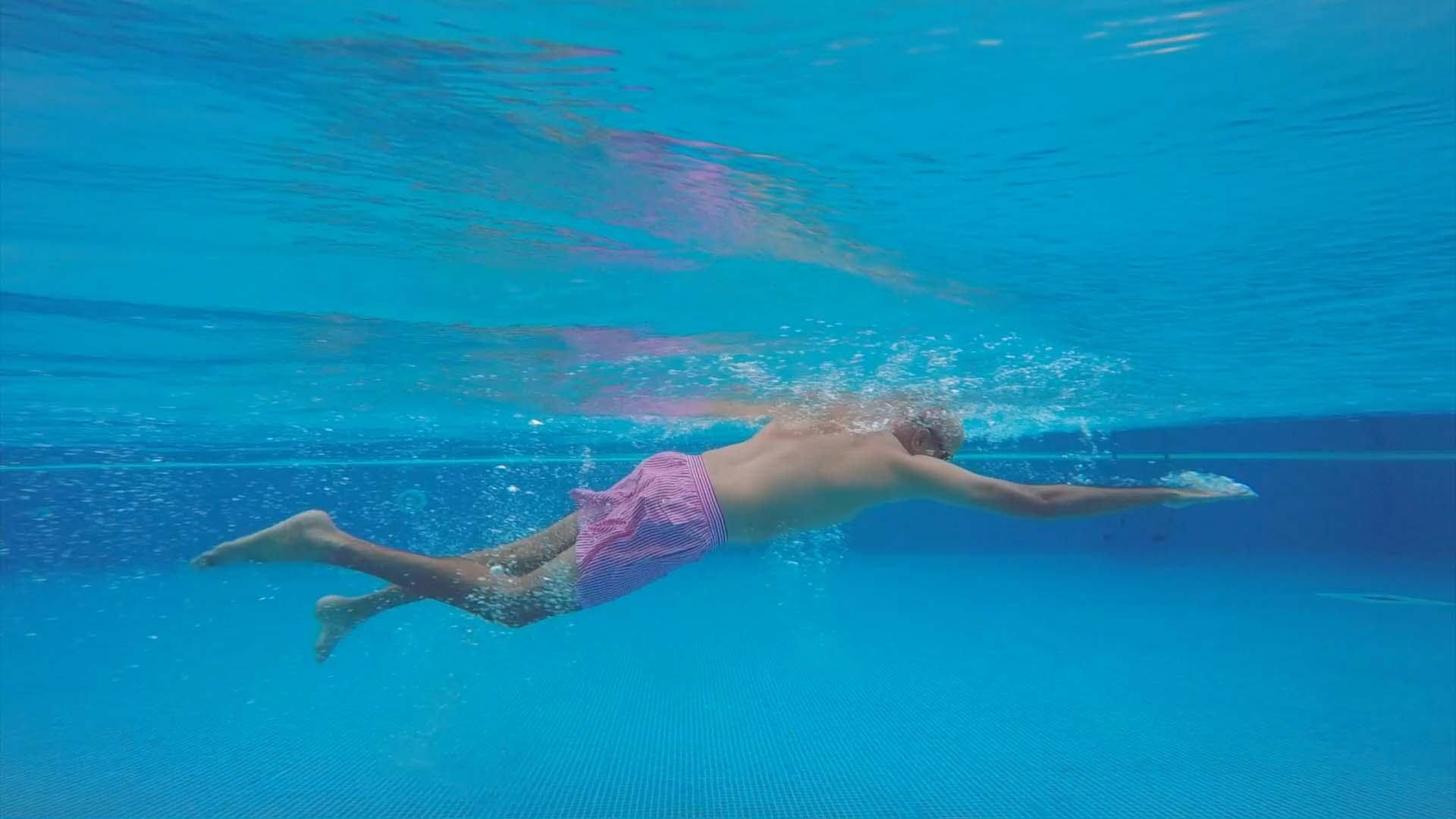
- Once you've floated up to the surface, release your legs and begin to extend them out behind you.
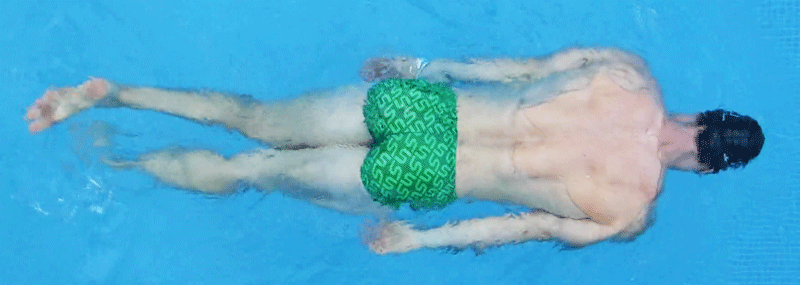
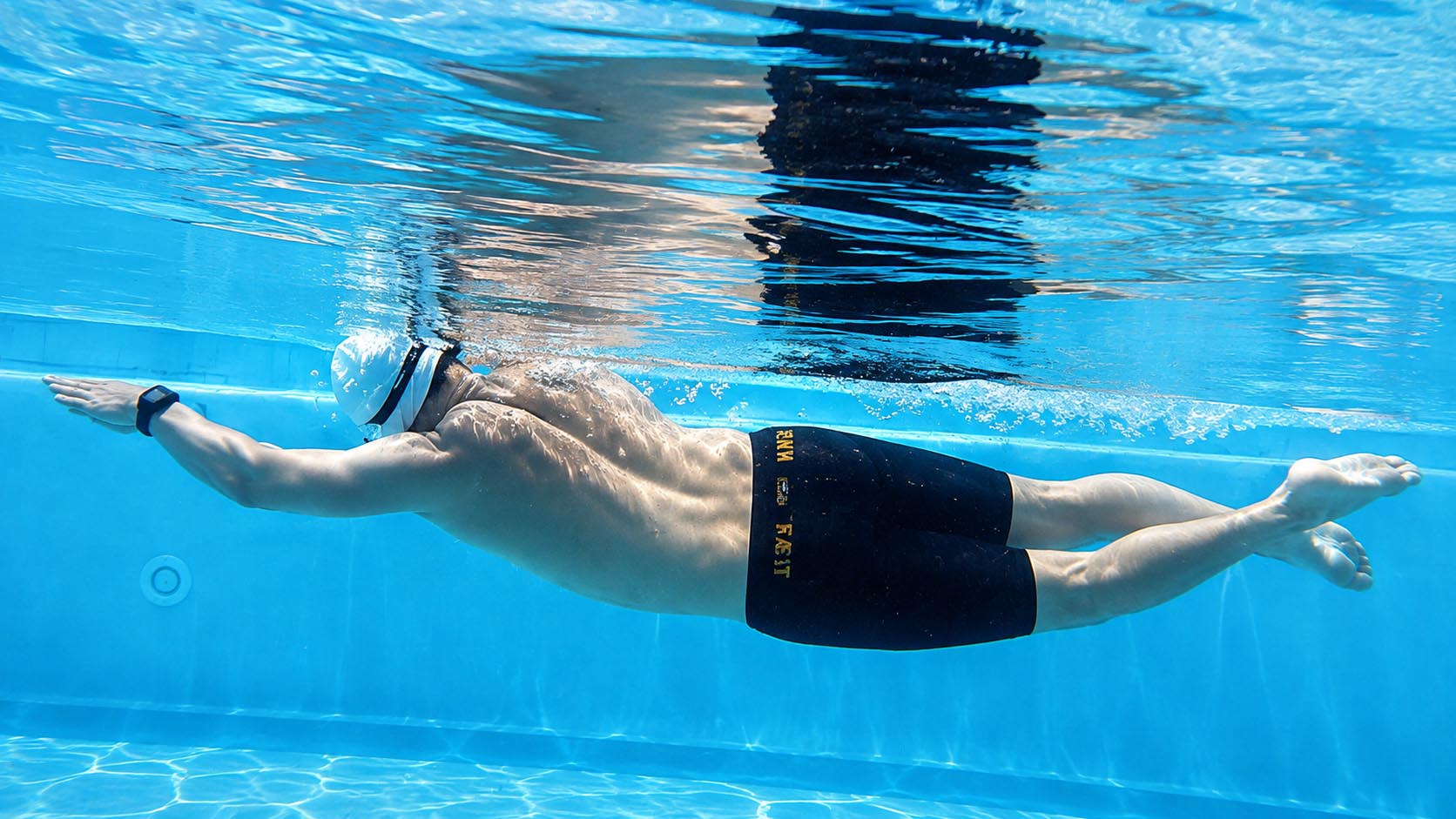
- Notice how your legs sink as you open up your body.
- When your legs have stopped sinking or you run out of breath, stand up.
Drill
Dead Man's Float — Phase 2
Repeat the test again. The second time you do it, as you extend your legs out behind you, stretch your arms out in front of you at the same time.
What we see in Phase 1 of the dead man's float is that your legs sink no matter what. The legs have a higher sp gr than your chest and the water so they sink faster!
Nearly every adult's legs sink when doing the dead man's float. Mine absolutely do!
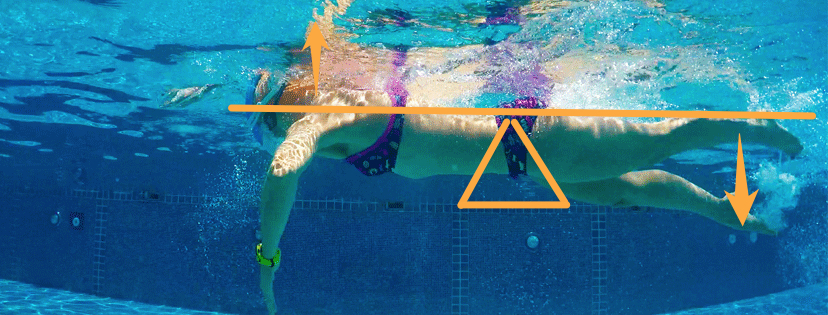
As you stretch out the center of gravity begins to move down towards your feet. The further the center of gravity moves from the center of buoyancy, the faster your legs sink.
In all my years coaching, I've only had a handful of people that can float in this horizontal position (without kicking). The sp gr in their legs is lower than water and they are able to balance without moving. In most cases, these clients have been women and have had a higher body fat percentage at or around their hips. The extra fat decreases the sp gr in the legs which helps keep them level on the surface.
UNDERSTAND THAT YOUR CENTER OF GRAVITY SHIFTS IS THE KEY TO YOUR SINKING LEG PROBLEM. By changing your body position you can keep the center of gravity close to the center of buoyancy. The closer you keep these two points, the better you will balance.
There are a few ways we can do this:
1
Increase the amount of fat on your hips and thighs
Fat floats. If you have more fat around the most dense part of your body, you shift the center of gravity forward. If you carry a higher percentage of fat on your hips and thighs, you will balance better. While this is a potential solution, it isn't practical for your triathlon performance. It's likely to negatively impact your bike and run times and effort.
2
Kick more and kick harder
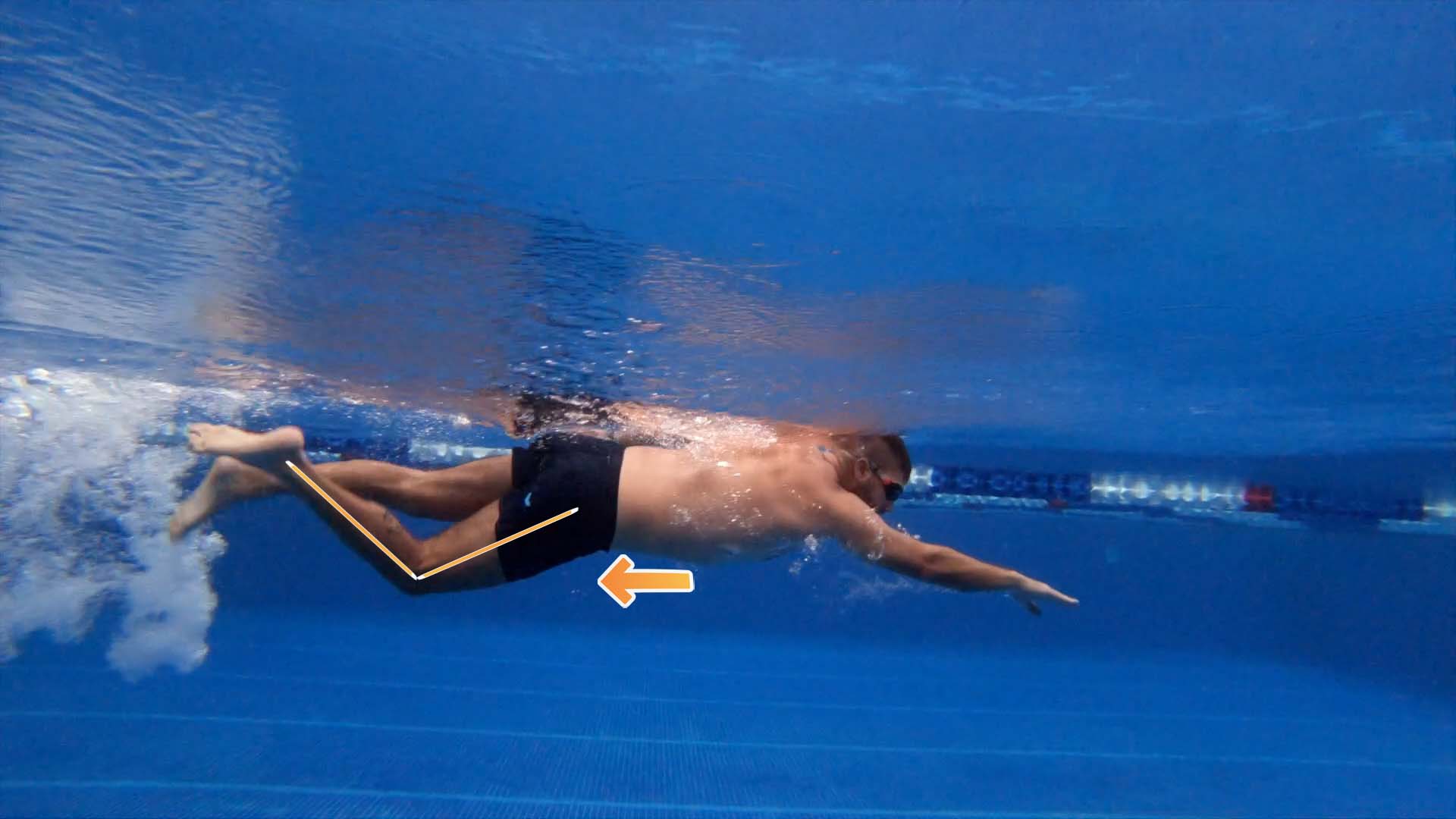
Every time one of your legs kick down there is an equal and opposite reaction pushing up. The upward push lifts your legs in line with your hips and head keeping your body balanced. If you have a good kick, you can keep your body balanced by increasing your kick tempo and the force of your kick. This is a highly effective solution. And it's something you will want to learn and practice. But you have to manage how you kick. Too much kick will use a lot of energy that could be better spent elsewhere on race day. You need to use your legs in your freestyle, but you need to strike a balance.
3
Manipulate and control your body positions
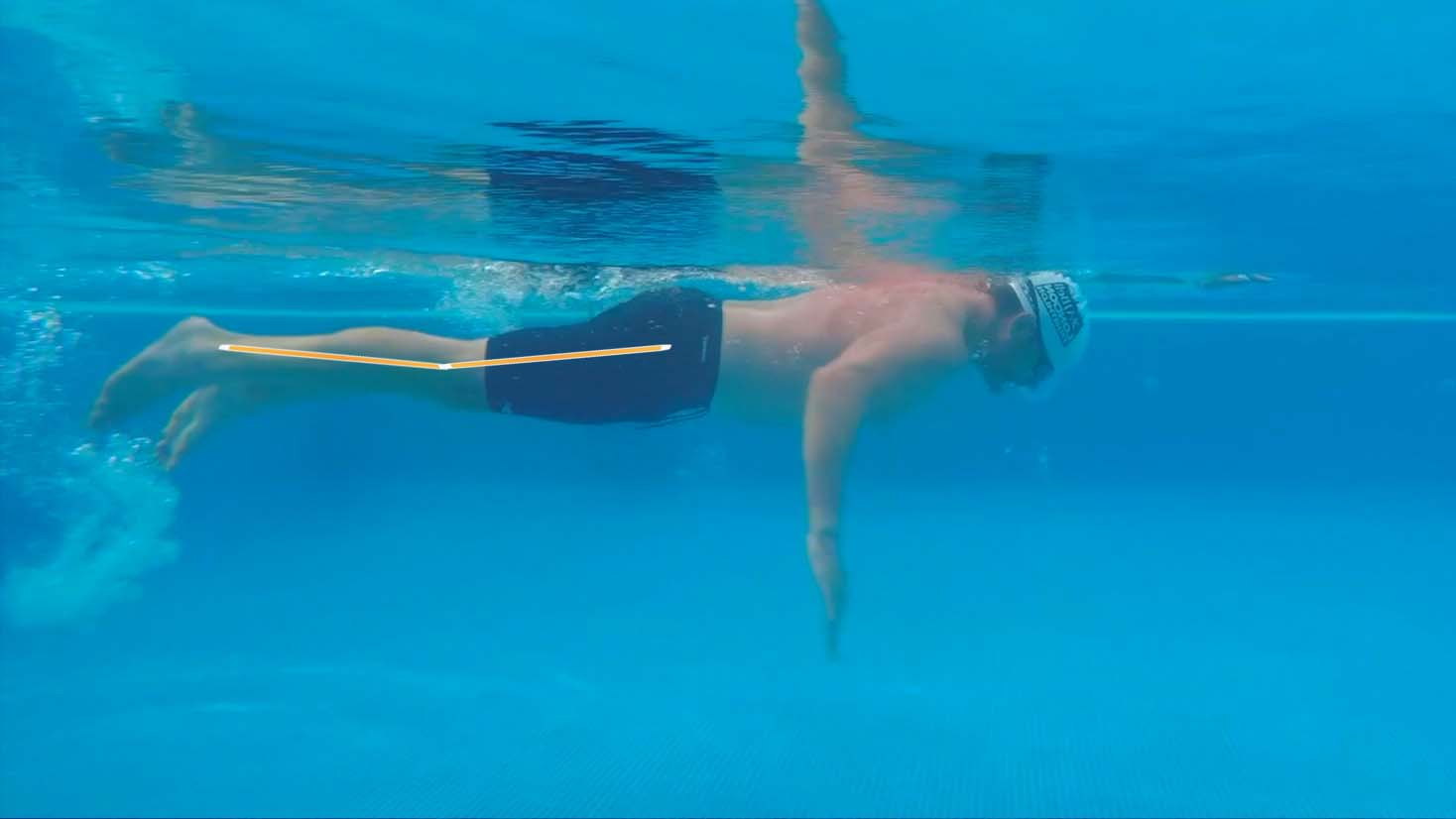
By changing your body position you can keep the center of gravity close to the center of buoyancy. The closer you keep these two points, the better you will balance. By making subtle adjustments to your body position you can change how well you balance. So fixing your sinking leg issue comes down to technique and how well you can find good body position.
This is why I began this chapter by saying:
"Your body composition is not a limiter on your ability to swim fast. Your technique or positioning does."
If you get into the wrong positions you will sink. Using the wrong technique, you increase the distance between your center of gravity and center of buoyancy. As that distance increases, your legs sink deeper.
When you find the right technique, you will float. You will stop praying for a wetsuit legal swim. You'll finally be able to throw away your damn buoyancy shorts. You will finally find efficiency and speed in the water.
A note on salt water
The density and temperature of the water you are swimming in plays a small role. The sp gr of salt water is 1.025 (up from 1.00 in freshwater). Because salt water is more dense than freshwater, you will float higher in the ocean than you do in the pool.
Fixing Your Sinking Leg Problems
Ok, you get it. You CAN stop your legs from sinking. We just need to understand what the root cause of your issue is, and then work to solve it. Let's get into the details.
I've identified and explained the 15 most common technique mistakes I see triathletes make and give you the exact steps to fix each one. Let's get into it!